
Coverage
Topics range from RTL abstraction and hardware DSLs to SysML v2, Lingua Franca, and manufacturing-system simulation.
(loading) in (loading), opening one day ahead of the main FDL conference and continuing alongside it. See the day-by-day program.
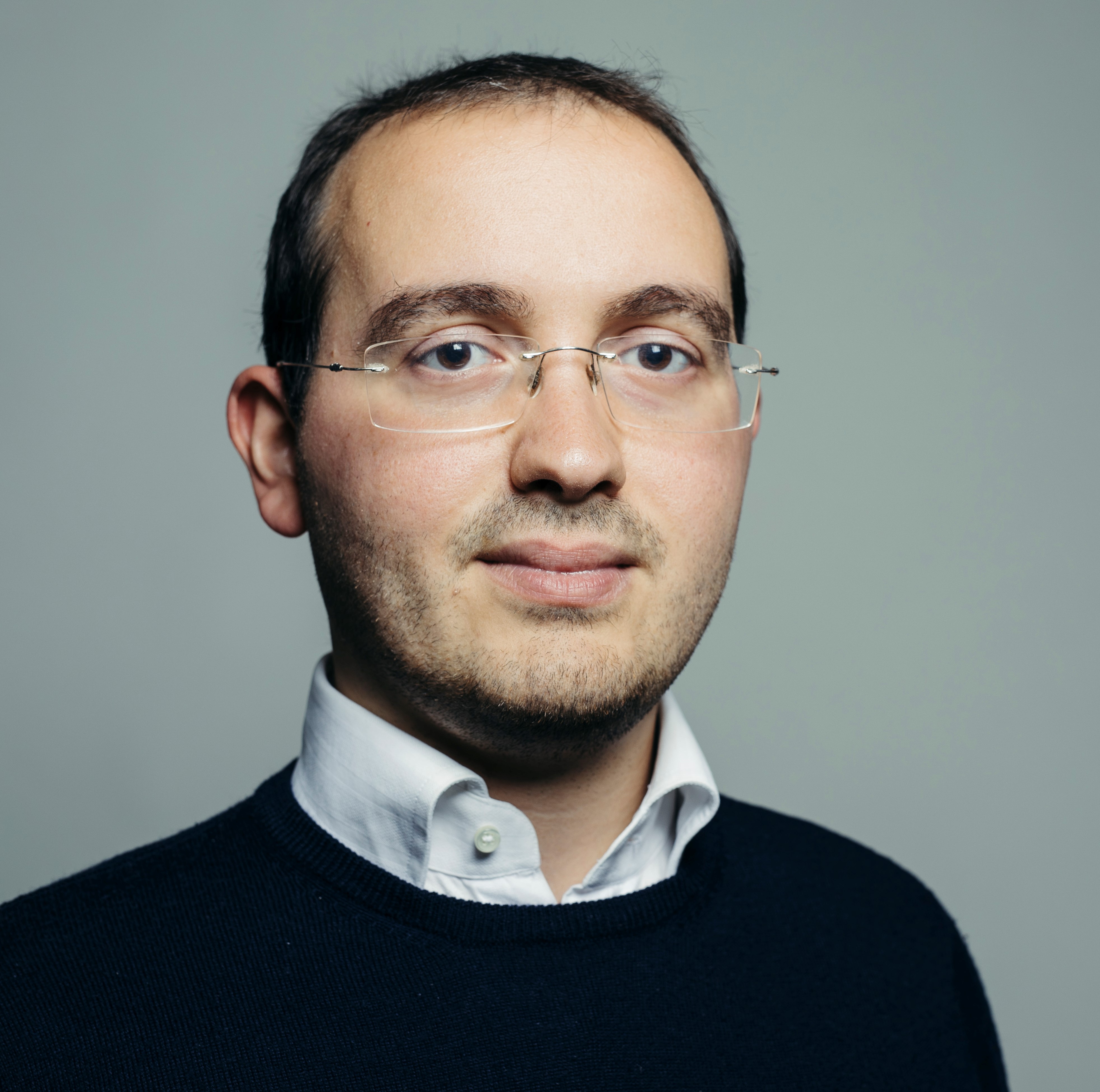
Daniele Passaretti
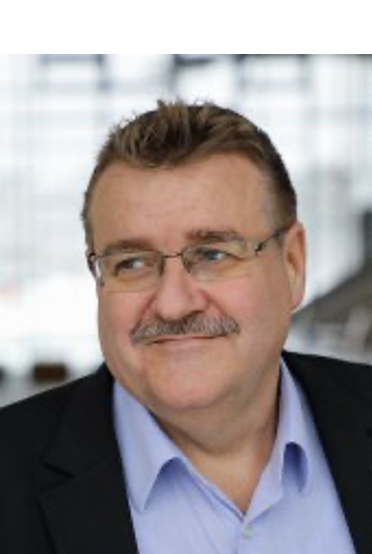
Wolfgang Ecker

Sebastian Reiter
Hokeun Kim

Enrico Fraccaroli
Frederic Petrot
The FDL 2026 Summer School features six invited sessions spanning modeling abstractions, hardware construction languages, system engineering, and deterministic cyber-physical design. The program combines research talks with tutorial-style and hands-on sessions for attendees who want both conceptual depth and practical exposure. The full day-by-day schedule is available in the Summer School Program section.
Topics range from RTL abstraction and hardware DSLs to SysML v2, Lingua Franca, and manufacturing-system simulation.
The lineup includes invited talks, hands-on tutorials, and mixed talk-plus-practical sessions.
Summer School participation is part of FDL 2026. See the registration page for attendance details.
Hands-on note: some sessions include hands-on activities and require participants to prepare their laptops in advance. See the Hands-on Preparation section for the setup instructions of each session.
The FDL 2026 Summer School runs from Tuesday, September 8 to Friday, September 11, 2026. It combines a dedicated Summer School day with selected activities of the main FDL conference program.
| Session | Time | Contribution |
|---|---|---|
| Talk | 9:00-11:00 |
Beyond RTL: Hardware DSLs for Higher Abstractions in Digital Design and the RISC-V Ecosystem |
| Talk + Hands-on | 11:00-13:00 |
Hardware Construction Languages: Register Transfer Level on Steroids |
| 13:00-14:00 | Lunch Break | |
| Hands-on Tutorial | 14:00-16:00 |
Modeling and Programming Time-Sensitive Systems Using Lingua Franca Coordination Language |
| Hands-on Tutorial | 16:00-18:00 |
GLACIER: An Open Framework for Modeling, Simulating, and Validating Modern Manufacturing Systems |
Session order: the sequence is designed to provide continuity between related topics. Frederic Petrot's Chisel hands-on follows Daniele Passaretti's introduction to higher-level hardware abstractions, while the Lingua Franca tutorial precedes the GLACIER session, which builds on Lingua Franca.
Summer School participants are encouraged to attend the FDL technical program, with particular emphasis on:
| Session | Time | Contribution |
|---|---|---|
| Keynote 1 | 10:00-11:00 |
From Models to Decisions — Why Modeling Must Become an Execution Engine in the Age of AI |
|
Special Session 2
Organizer ⤷ Frederic Petrot |
17:00-18:30 |
Hardware Construction Languages: Register Transfer Level on Steroids |
Highlighted activities for Summer School participants:
| Session | Time | Contribution |
|---|---|---|
| Keynote 2 | 9:00-10:00 |
seL4: the journey of a verified kernel deployed in real systems |
| Summer School / FDL Tutorial | 16:00-17:00 |
Note: Wolfgang Ecker's FDL tutorial constitutes his contribution to the Summer School.
Highlighted activities for Summer School participants:
| Session | Time | Contribution |
|---|---|---|
| Keynote 3 | 9:00-10:00 | |
| Summer School | 15:30-17:30 |
For the complete FDL 2026 conference schedule, see the conference program.
Daniele Passaretti on hardware DSLs, abstraction, and the RISC-V ecosystem.
Wolfgang Ecker on abstraction, model quality, and design disciplines.
Sebastian Reiter on KerML foundations, textual syntax, and extensibility.
Hokeun Kim on deterministic concurrency and time-sensitive distributed systems.
Enrico Fraccaroli on open manufacturing-system simulation and validation.
Frederic Petrot on Chisel and higher-level digital circuit construction.
Some Summer School sessions include hands-on activities and require participants to prepare their laptops in advance. Please follow the instructions below before attending the respective session.
Participants should bring a laptop running Linux, macOS, or Windows Subsystem for Linux (WSL), or another environment capable of running a virtual machine with Lingua Franca preinstalled.
Participants attending the Hardware Construction Languages / Chisel hands-on session should bring a fully charged laptop and prepare the required environment before the session.
The tutorial uses a Docker-based environment to provide all required tools. Participants should install and test the environment in advance to avoid spending tutorial time on infrastructure setup.
Participants attending the GLACIER hands-on session should bring a laptop and prepare the workshop environment before the session.
The workshop can be run either using Docker directly or through Visual Studio Code with the Dev Containers extension. Participants are strongly encouraged to prepare and test their chosen environment before arriving at the Summer School.
As hardware systems continue to grow in complexity, the languages used to describe them must evolve accordingly. Raising the level of abstraction in hardware design is essential to improve productivity, reuse, and design quality. This talk introduces hardware design languages from traditional HDLs to newer DSL-based approaches.
It presents the role of HDLs and DSLs in hardware development, highlighting the conceptual difference between software programming in C and hardware description, and examines the usability challenges of conventional RTL-centric design based on Verilog and SystemVerilog. High-Level Synthesis is discussed as an important step toward higher abstraction, while also showing why algorithmic descriptions alone are not sufficient for all hardware design tasks.
The session then introduces hardware DSLs such as Bluespec, Chisel, SpinalHDL, and Clash, focusing on the ideas that motivated their emergence and the abstractions they provide for hardware construction. It closes by exploring their relevance in the RISC-V ecosystem, where configurable architectures, reusable generators, and open design methodologies are increasingly important.
This talk covers guiding principles of models and argues that abstraction is their most important feature. Because abstraction removes details, models are necessarily imperfect in some circumstances, echoing the observation that all models are wrong, but some are useful.
The session discusses several digital design abstraction methods, including lumped, value-discrete, and time-discrete models. It relates these abstractions to pre-clustered elements such as transistors, gates, registers, and transfer functions.
It further compares abstraction levels, connects them to current IP-based design, and shows how other disciplines, such as synchronous analog design or asynchronous digital design, fit into the broader abstraction scheme.
This session explores SysML v2 from a meta-model perspective. It first contrasts the UML-based profile of SysML v1 with the KerML-based foundation of SysML v2.
After introducing both graphical and textual notations, the talk provides practical examples of the textual syntax together with the underlying grammar rules.
It concludes by examining extensibility and modularity mechanisms, showing how domain-specific adaptations can be defined with libraries and specializations without compromising core semantics.
This hands-on tutorial introduces the Lingua Franca coordination language for modeling and programming time-sensitive systems with deterministic concurrency. Its primary goal is to give participants an engaging programming experience that helps them design domain-specific applications and systems with determinism and repeatability.
The tutorial includes a brief introduction to Lingua Franca, a live demo of building programs with specified timed behavior, and interactive programming exercises based on template code. It explores design alternatives for time-sensitive systems using the reactor model of computation, along with different coordination modes for federated and distributed Lingua Franca programs.
Participants will experience the full toolchain from code generation and compilation to distributed execution, reason about deterministic ordering mechanisms for timestamped events, and study trade-offs between consistency and availability in distributed concurrent settings.
This hands-on tutorial introduces the GLACIER project, an open-source framework for the design, simulation, and validation of modern manufacturing systems. It starts from the challenges posed by increasingly complex cyber-physical production environments, including the integration of heterogeneous machines, software services, and communication infrastructures in service-oriented manufacturing architectures.
The session presents GLACIER as a framework for building open and extensible virtual testbeds in which advanced manufacturing software can be developed and evaluated before deployment. Particular attention is given to Frost, the GLACIER simulation platform built on Lingua Franca, which supports deterministic execution and unified modeling of machines, clients, data models, and communication behaviors.
Through guided practical activities, participants will explore how manufacturing components can be represented, connected, and executed in simulation, and how these virtual setups support early software validation, digital twin development, and machine-in-the-loop experimentation.
This two-hour hands-on lab complements Daniele’s course on higher-level hardware abstractions by diving directly into the Chisel hardware construction language.
Phase 1: Foundations without the Friction
While Chisel operates at the Register Transfer Level (RTL), its Scala-based
syntax offers a fresh perspective on digital design. We will begin by grounding
ourselves in the essentials: defining circuits, modules, ports, signals, and
registers. We’ll treat the initial syntax hurdle as a rite of passage—a quick
investment that unlocks the true power of the language.
Phase 2: From “The Old Way” to Scalable Generators
The real magic of Chisel lies in its ability to be highly generic. We will move
beyond static designs, starting with a traditional “fixed” circuit and evolving
it into a reusable, parameterized generator. You’ll see firsthand how Chisel
constructs can simplify a designer’s life, making hardware components adaptable
to a wide variety of contexts and constraints.
Logistics: Zero-Setup Execution
Modern RTL generation and testing often come with complex tooling requirements.
To ensure we spend our time designing rather than debugging environments, we
will provide a pre-configured Docker image and a suite of automation scripts.
This setup ensures a smooth, “plug-and-play” experience for all attendees on Linux.
The FDL 2026 Summer School is organized in the context of the European project STRATEGUS – STRATEgic GUide to Smart manufacturing. This project has received funding from the European Union’s Horizon Europe research and innovation programme under the Marie Skłodowska-Curie Actions (MSCA), grant agreement No. 101109243.